By Elvira Jordan
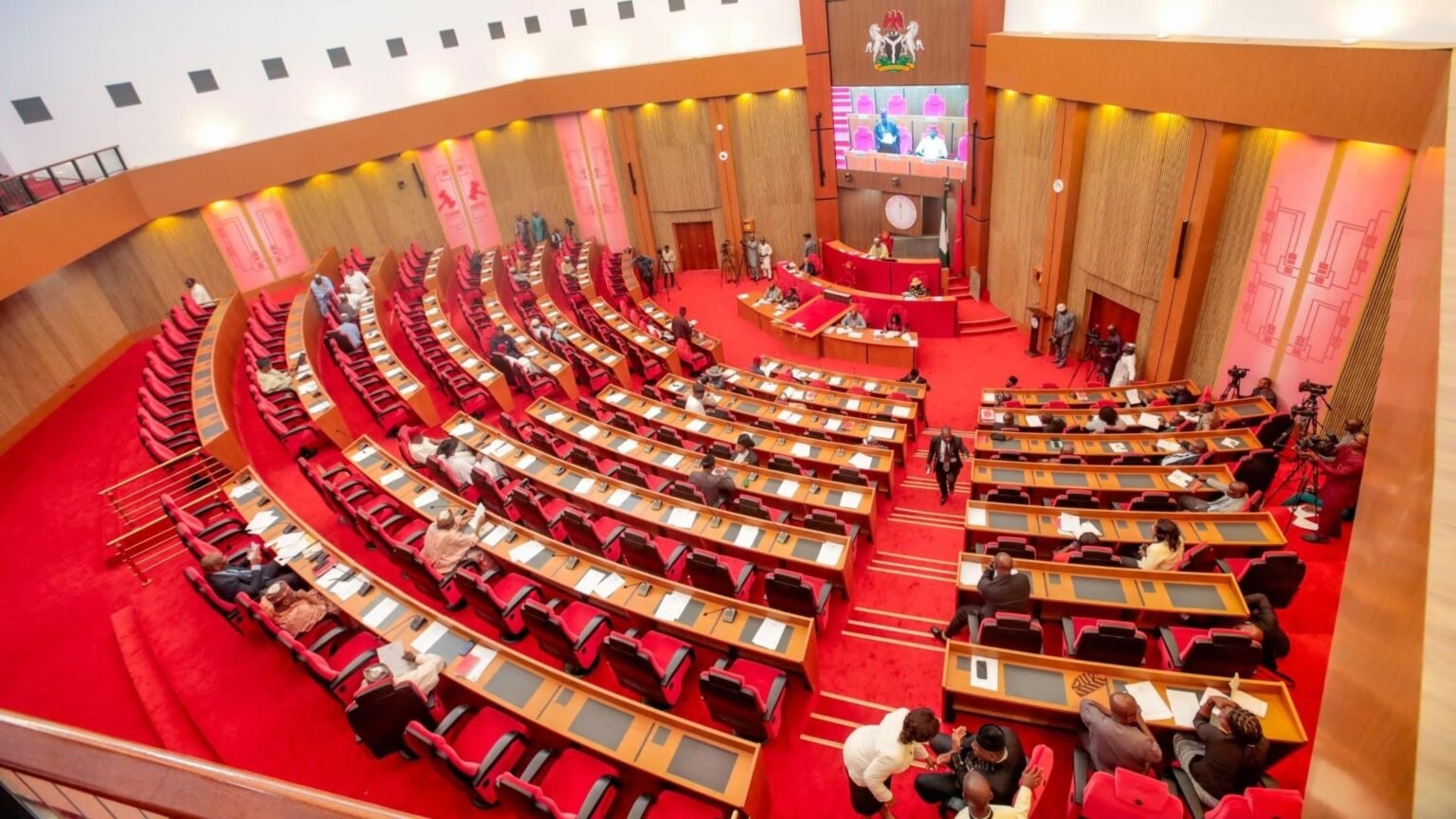
The Senate has advanced legislative efforts to compel global social media companies operating in Nigeria to establish physical offices in the country, as stakeholders expressed overwhelming support for the proposal during a public hearing held in Abuja.
The public hearing, organised by the Senate Committee on Information and Communications Technology (ICT) and Cyber Security, also considered a separate bill seeking to establish an Artificial Intelligence (AI) Academy in Omuo-Ekiti, Ekiti State, with participants also backing the initiative.
The proposed amendment to the Nigeria Data Protection Act, 2023, sponsored by Senator Ned Nwoko (Delta North), seeks to make it mandatory for social media companies operating in Nigeria to maintain physical offices within the country’s territorial boundaries.
The second bill, sponsored by Senator Yemi Adaramodu (Ekiti South), Chairman of the Senate Committee on Media and Publicity, aims to establish an Artificial Intelligence Academy to promote AI education, research and innovation.
Opening the hearing, Chairman of the Senate Committee on ICT and Cyber Security, Senator Shuaib Salisu (Ogun Central), said both bills were designed to strengthen Nigeria’s digital economy and position the country for technological advancement.
According to Salisu, the social media bill is intended to improve the regulation and protection of Nigeria’s cyberspace, while the proposed AI Academy would serve as a centre of excellence for artificial intelligence education, research and innovation.
President of the Senate, Godswill Akpabio, represented by the Deputy Senate Leader, Senator Lola Ashiru (Kwara South), described both proposals as forward-looking and significant to Nigeria’s future.
He said the bill requiring social media companies to establish physical offices in Nigeria was not intended to hinder their operations but to encourage greater accountability, stronger engagement and closer collaboration with the country.
Defending the proposed legislation, Senator Nwoko rejected claims that the bill could discourage investment or target technology companies.
“This Bill is neither punitive nor hostile to innovation. It is not designed to frustrate investment or discourage technology companies from operating in Nigeria. On the contrary, it seeks to deepen their engagement with Nigeria by encouraging them to become true corporate citizens of our country,” he said.
Nwoko argued that several countries with smaller populations and digital markets than Nigeria had successfully attracted global technology companies to establish regional headquarters and operational centres.
He cited countries including the United Kingdom, the Netherlands, Spain, Singapore, India, the United Arab Emirates, South Africa, Brazil, Australia and Japan as examples where technology firms have established offices performing functions such as engineering, artificial intelligence research, legal and regulatory compliance, public policy, cloud services, customer support, sales and product development.
According to him, those countries recognised the strategic importance of the digital economy and benefited from increased employment, technology transfer, innovation, stronger regulatory engagement and higher tax revenues.
He pointed to Ireland as a model, noting that the presence of multinational technology companies such as Meta, Google, LinkedIn, TikTok and X had transformed the country into one of Europe’s leading technology hubs through job creation, innovation and foreign investment.
Nwoko maintained that Nigeria, as Africa’s largest digital market, should not be left behind.
“The question therefore is simple: if countries with significantly smaller populations and digital markets than Nigeria have secured these investments and benefits, why should Nigeria continue to stand on the sidelines? Why should Africa’s largest digital market not enjoy the same opportunities?” he asked.
The public hearing concluded with stakeholders expressing broad support for both bills, setting the stage for further legislative consideration as the Senate continues efforts to strengthen Nigeria’s digital economy and expand its technology ecosystem.