By Sandra Kenneth
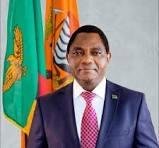
President Hakainde Hichilema was officially sworn in for a second five-year term on Tuesday before thousands of cheering supporters packed into a Lusaka stadium, taking the oath of office even as his primary political rival remains jailed on treason charges.
Supporters dressed in the red colors of Hichilema’s ruling United Party for National Development (UPND) celebrated the inauguration alongside several visiting African heads of state. The 64-year-old leader secured a decisive victory in the August 13 election, taking 60 percent of the vote according to official figures.
His victory, however, comes under a heavy shadow following an election cycle marked by allegations of political intimidation, pro-government bias, and tightening restrictions on political dissent.
The main opposition challenger, Brian Mundubile—a 55-year-old former provincial government minister who placed second with 38 percent of the vote—was absent from the proceedings. Mundubile and his running mate, Makebi Zulu, surrendered to authorities after spending nearly two weeks in hiding following an August 14 security force raid on his home.
During the raid, which authorities claimed targeted an illegal militia posing a national security threat, a former cabinet minister was shot and killed, and 11 campaign members were arrested. Mundubile’s NRPUP alliance has strongly denied the allegations, calling the charges politically motivated. International election observers have expressed sharp criticism over the arrests, political intimidation, and unexplained pauses during the vote-counting process.
Hichilema, who himself spent four months in a maximum-security prison on treason charges following his lost election bid in 2016, enters his second term facing a complex domestic landscape. While credited with driving a major economic turnaround, implementing market-friendly reforms, abolishing the death penalty, and introducing free primary and secondary education since taking power in 2021, broad public discontent remains.
Economic growth has yet to relieve daily financial pressure on ordinary citizens in the copper-rich nation. World Bank data indicates that over 70 percent of Zambia’s 22 million people continue to live on less than three dollars a day amid persistent inflation.
As Hichilema begins his final constitutional term, observers question whether Zambia can maintain its historic reputation as one of Southern Africa’s most stable democracies, a status earned through decades of peaceful power transfers since independence in 1964.