By Sandra Kenneth
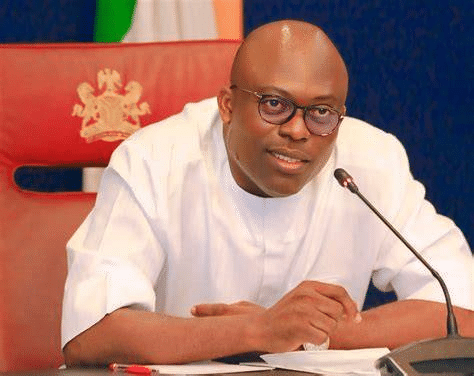
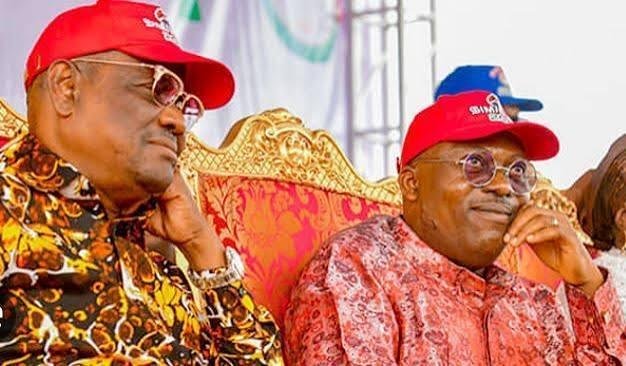
In a major development signaling a thaw in Rivers State’s turbulent political landscape, the Minister of the Federal Capital Territory (FCT), Nyesom Wike, on Sunday visited Governor Siminalayi Fubara at his private residence in Port Harcourt.
The high-profile meeting brought together the governor and key figures from the rival political camp, including members of the Rivers State House of Assembly led by Speaker Martin Amaewhule, and all 23 local government area chairmen in the state.
Sunday’s visit marked the first time the FCT minister has met with Fubara at his private home, coming roughly two weeks after Wike led members of the Rainbow Coalition—including the state’s All Progressives Congress (APC) candidate for the 2027 general elections, Kingsley Chinda—to a prior meeting with the governor. Chinda was also part of the delegation present at Sunday’s talks.
While official details of the closed-door meeting were not immediately released, sources close to both camps indicate that the engagement is designed to solidify ongoing reconciliation efforts and explore frameworks for integrating Governor Fubara’s loyalists into the state’s evolving political alignment.
The meeting represents a critical milestone in healing divisions stemming from a bitter, multi-year feud between Fubara and his predecessor, Wike. The intense political crisis previously saw the state legislature attempt impeachment proceedings against the governor twice, culminating in the bombing of a section of the State House of Assembly complex along Moscow Road in October 2023.
The escalation prompted decisive federal intervention in March 2025, when President Bola Tinubu declared a state of emergency in Rivers State for an initial six-month period, suspending the governor, deputy governor, and lawmakers, and appointing Ibok-Ete Ibas as sole administrator before elected officials eventually returned to office.
Sunday’s gathering bridges key power blocs in the state, bringing the executive arm directly together with Wike-aligned legislative leaders and local government bosses.
Political analysts note that the renewed engagement between the two camps could significantly stabilize Rivers State’s political environment ahead of the 2027 general elections. However, questions remain regarding how power, local council influence, and electoral tickets will ultimately be shared between the factions as the peace process unfolds.