By Samuel Olusegun Precious
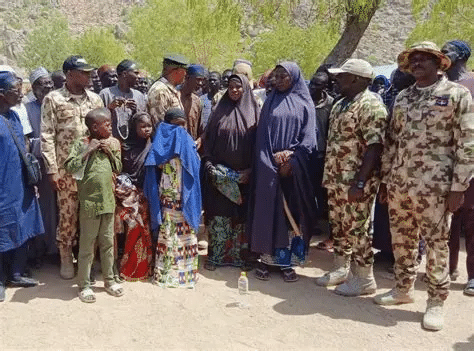
Reports from multiple sources indicate that more than 300 civilians abducted from Ngoshe in Gwoza Local Government Area of Borno State have been released after spending about 95 days in captivity.
The victims, including women and children, were abducted in April 2026 by terrorists believed to be from the Jama’atu Ahlis Sunna Lidda’awati Wal-Jihad (JAS) faction of Boko Haram loyal to Ali Ngulde.
The Federal Government announced their release last week, saying it was achieved through an intelligence-led operation by security agencies. It did not give details of the operation.The government insists no ransom was paid, maintaining its long-standing policy against paying terrorists
But two independent reports have contradicted that claim. An investigation by two online media reported that large sums were paid to secure recent mass abductions in the North-East.
A new report by intelligence firm SBM Intelligence titled “The Capture of the Kidnap Economy” went further, alleging that N5 billion was paid for the Ngoshe hostages and N2 billion for over 300 pupils abducted from St. Mary’s Catholic School, Papiri, Niger State.
According to SBM, which tracked kidnappings from July 2025 to June 2026, kidnappers collected N7.78 billion nationwide in that period, up from N2.56 billion the previous year – a 34% collection rate. It said 90% of that amount (N7 billion) went to the JAS faction of Boko Haram from just eight incidents.
“While the terror group got N5 billion to release the Ngoshe captives, it pocketed N2 billion in ransom for the release of the Papiri students,” the report stated.
SBM said its figures were based on interviews with community leaders, negotiators, security sources and families of victims.
The conflicting accounts have raised questions among Nigerians. If no ransom was paid, how were over 400 hostages, according to SBM’s count, moved out of terrorist enclaves around the Mandara Mountains without a major firefight or casualties being reported? If ransom was paid, who paid it and does it not violate the Terrorism Prevention Act which criminalizes financing terrorism?
Security analysts say the lack of transparency fuels speculation. While government silence on operational details may be for security reasons, the absence of an after-action report from the military or the Office of the National Security Adviser leaves room for allegations to thrive.As of the time of this report, the Defence Headquarters has not published photos, videos or details of the rescue operation.