By Samuel Olusegun Precious
For over a decade, Port Harcourt residents lived with a paradox – a city surrounded by water but without potable water, forced to survive on private boreholes. That paradox was the story of the Port Harcourt Water Supply and Sanitation Project, a $250 million (N375 billion) urban water reform project funded by the World Bank and the African Development Bank (AfDB), designed to supply over 1.5 million residents of Port Harcourt and Obio/Akpor with clean piped water.
The project, which would have transformed Port Harcourt into a modern water city, became a victim of political rivalry at both federal and state levels.
HOW IT STARTED
Under the administration of former Governor Chibuike Rotimi Amaechi, the Rivers State Government met all World Bank conditions. The National Assembly approved the loan facility. But the final drawdown required the signature of the Minister of Finance, Dr. Ngozi Okonjo-Iweala.The loan was never released.
Amaechi openly accused the Federal Government of playing politics with Rivers water. Speaking at a House of Representatives Committee on Water Resources hearing in Port Harcourt, he said:”We are prepared to allow the Honourable Minister to award the contract to any person of her choice, we are only interested in water for our people.”
At the time, Amaechi, as Chairman of the Nigeria Governors Forum, was locked in a fierce political battle with President Goodluck Jonathan’s administration, where incumbent FCT Minister Nyesom Wike was a powerful minister.
Sources said the office of the Finance Minister was “prevented from signing” the facility.
SECOND STALL: WIKE VS AMAECHI
When Wike became Governor in 2015, the World Bank water project suffered again. All efforts to revive the loan proved abortive. The project was perceived as an Amaechi legacy, and like the Greater Port Harcourt City Project (N1 trillion), the Monorail project (over N20 billion already spent with coaches at Onne Port), and the Etche Agro-village with Israeli partners, it was abandoned. Port Harcourt remained a borehole city.
DONOR FRUSTRATION
A recent civil society investigation into why World Bank water projects failed in Rivers, Ekiti and Bauchi revealed further complexity. In Rivers, the National Urban Water Sector Reform Project (NUWSRP3) was to be jointly executed by the World Bank and AfDB. But “ineffective coordination between the two financial institutions and procurement challenges led to severe delays… culminating in the World Bank ultimately withdrawing its support,” the report stated.
Supervision reports from the AfDB later rated implementation as “unsatisfactory”, citing delays in contract signing and failure to fully staff the Port Harcourt Water Corporation (PHWC).
REVIVAL AFTER 12 YEARS
The project only survived through the AfDB component. After years of dormancy, construction finally accelerated. By May 2025, AfDB Implementation Progress Reports put physical progress at 99%. In September 2026, the Managing Director of PHWC, Chief Ibibia Walter, announced the completion of major works – with capacity to produce 148 million litres of water per day, laying of over 456km of distribution pipes, and ongoing household connections and metering across Port Harcourt and Obio/Akpor.
What was conceived as a three-year transformation project in 2013 took almost 12 years to materialize – a testament to how politics, not engineering, remains the biggest infrastructure challenge in Rivers State.
Over N2 trillion worth of public sector investments were lost in 12 years of endless political crises in Rivers, according to a BusinessDay analysis.
IMPLICATIONS OF WORLD BANK WITHDRAWAL
The withdrawal of the World Bank from the $250 million (N375 billion) Port Harcourt Water Project has left large parts of the city still without access to public water supply, despite the completion of the African Development Bank (AfDB) component. The project, under the Third National Urban Water Sector Reform Project (NUWSRP3), was originally designed as a joint intervention by the World Bank and AfDB to provide potable water for over 1.5 million residents of Obio/Akpor and Port Harcourt metropolis.
But a recent report by the Corporate Accountability and Public Participation Africa (CAPPA), titled Big Debt, Big Thirst, revealed that procurement challenges and poor coordination between the two development financiers led to severe delays, culminating in the World Bank pulling out of the project mid-way.”
For us, the withdrawal of World Bank support mid-project exemplifies the consequences of inter-institutional misalignment even in the so-called privatisation model and the sometimes-distorted nature of international development financing where rigid timelines and loan conditions override practical realities and public interest, leaving communities in dire need unmet,” CAPPA Executive Director, Akinbode Oluwafemi, said.
WHAT WAS LOST
The World Bank component was to cover major expansion to new layouts, network extension, treatment capacity and metering. When it pulled out, the scope shrank.The AfDB component that survived only delivered: Rehabilitation of existing water stations; 456km of distribution pipes; Capacity to produce 148 million litres per day. This cut off Trans Amadi, Oginigba, Abuloma and other substantial parts of the metropolis.
PORT HARCOURT WATER CORPORATION AWAIT GOV FUBARA’S NOD
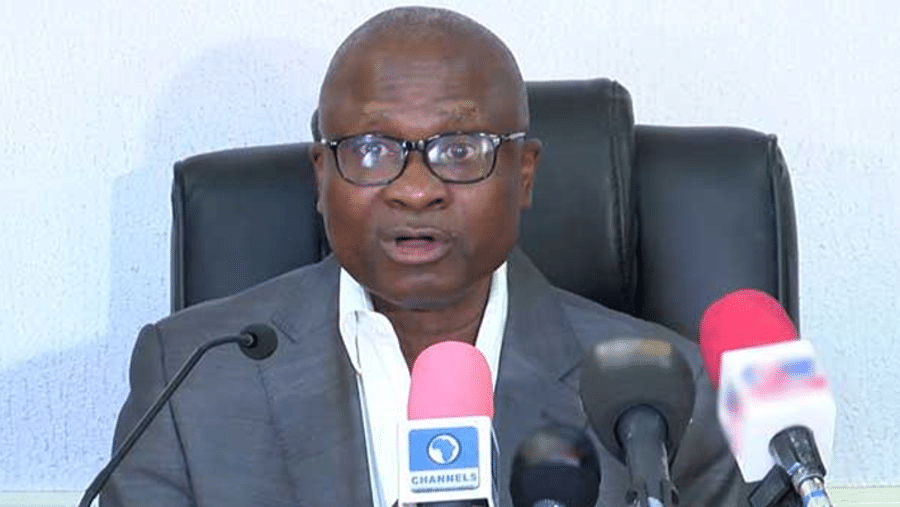
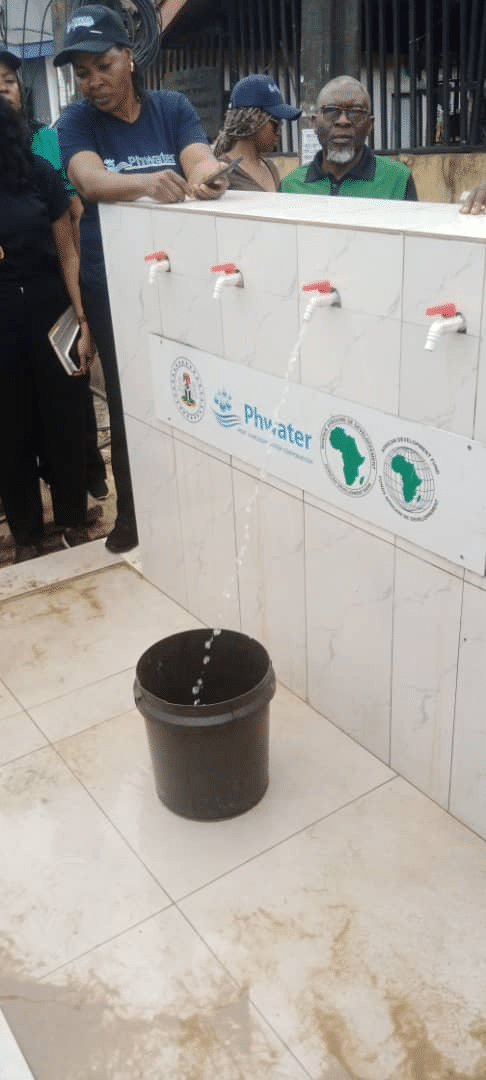
The Managing Director of Port Harcourt Water Corporation, Sir Ibibia Walter, during the inauguration of the Rivers State WASH Media Network at its corporate headquarters, Rumuola, Port Harcourt, said potable water is now available for households, schools, public places, religious places among others. But it awaits the approval of the Rivers State Government to commence full operations though connections to houses and other places are ongoing.
According to him, the Corporation has achieved its mandate to produce and distribute clean, treated water, with a production capacity of 148 million litres per day and over 456 kilometres of distribution network already laid across Port Harcourt and Obio/Akpor.
“Potable water is now available for households, schools, public places, religious places among others,” Walter said.
He, however, noted that full commercial operations are yet to commence as the Corporation awaits final approval from the Rivers State Government. Despite the pending approval, Walter said house-to-house connections and metering are currently ongoing across the city.
“Though we await the approval of the Rivers State Government to commence full operations, connections to houses and other places are ongoing. Our teams are in the field connecting customers,” he added.
The PHWC boss said the project has moved from construction to service delivery, and called on residents to connect to the public water network and desist from unsafe borehole sources.