By Elvira Jordan
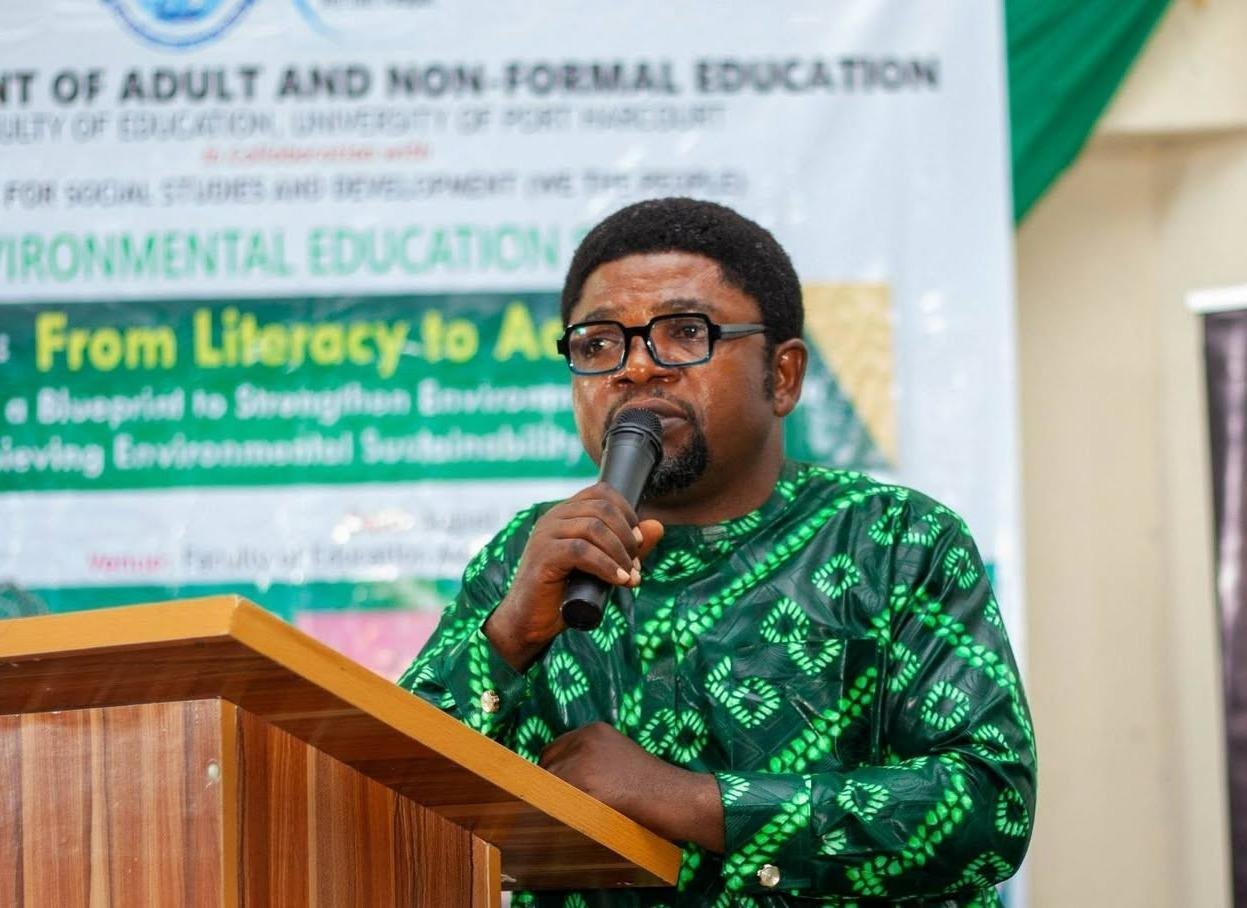
A Port Harcourt based environmentalist, Professor Mbalisi Festus Onyeka, has criticized the Rivers State Government’s response to flooding, calling for proactive measures to prevent the destruction of lives and property.
Professor Mbalisi of Adult and Environmental Education at the University of Port Harcourt pointed out that if the government had been proactive on early flood predictions by opening up canals and establishing drainage networks to allow floodwater to flow freely into rivers, creeks, wetlands and eventually the Atlantic Ocean, the flooding disaster could have been averted.
He said the failure to take preventive measures contributed to the submergence of homes, destruction of property and loss of lives recorded during recent flooding.
Professor Mbalisi also questioned the effectiveness of the two-hundred-thousand-naira cash assistance reportedly provided to families affected by the floods, arguing that the money cannot adequately compensate for lost lives, homes, businesses and personal belongings.
“What the Rivers State government would have done if the government had wanted to be proactive is to take necessary steps to make sure that the flood does not affect human lives by opening up canals that allow free flow of flood water. But nothing happened until the flood came, people’s houses submerged, properties destroyed, lives lost,” he noted.
The environmental education expert also raised concerns over the rapid development of wetlands and other natural flood retention areas across the state.
He cited areas between Obiri-Ikwerre and Airport Road, as well as Rumuokoro and the Airport axis, saying extensive construction had reduced spaces that previously served as natural reservoirs for floodwater.
Professor Mbalisi called for stricter enforcement of planning regulations, particularly against the construction of buildings on waterways and flood channels.
He also urged the Rivers State Government to develop an interconnected drainage network that would channel water from roads and communities into existing creeks, canals, ponds and rivers.
“Rivers State has a lot of creeks and canals that could have been opened up; that should have had a lot of drainage networks that will lead into these canals and swamps. The government will have to rise up to make sure that there is network of drainages that will lead into various streams, various canals and streams and ponds, then to the Atlantic Ocean,” he added.
On wider environmental risks, the professor expressed concern over pollution of land and water, reported pollution incidents in Etche, alleged gas leakages in Obelle Kingdom, destruction of mangrove forests and coastal erosion.
He also raised concerns about air pollution in the Port Harcourt metropolis, warning that the accumulation of environmental challenges could undermine sustainable human well-being in the state.
He continued: “Recently people reported pollution in Umuechem in Etche Local Government Area. Majority of the lands and waters are polluted, and currently there is a highly heated issue of gas leakages in Bille Kingdom. These are environmental risks. The mangrove forests are polluted, and many of the mangroves are gone, exposing the lands to coastal erosion. We have serious air pollution in the Port Harcourt metropolis of Rivers State.”
Professor Mbalisi called on residents to participate actively in environmental governance by obeying environmental laws, reporting violations to relevant authorities and ensuring that waterways and flood routes are not blocked.
He stressed that preventing construction on waterways and protecting natural drainage systems should be a shared responsibility between government and residents.