By Sandra Kenneth
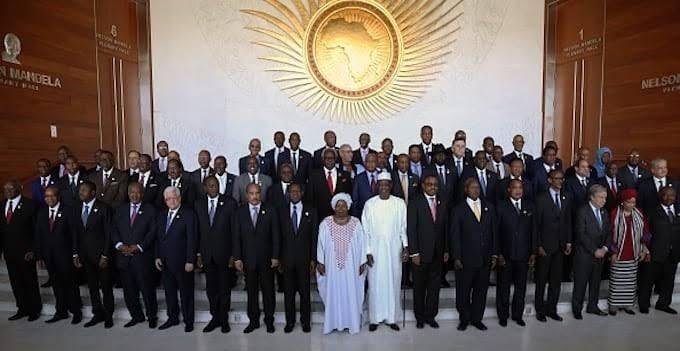
More than 20 heads of state and government representatives, alongside top business leaders, bankers, and development institutions, are scheduled to assemble in the coastal city of Alamein on Friday for the launch of the Alamein Africa Forum.
The inaugural three-day business summit marks a major strategic shift for Cairo as it seeks to rebuild its influence across the continent after decades of prioritizing affairs in the Middle East and the Mediterranean. The move comes as global powers and regional players—notably China and the United Arab Emirates—continue to expand their economic footprint in Africa.
According to Egyptian officials, the forum is designed to serve as a key economic hub. Operating under an African Union mandate, it is set to become a biennial event focused on vital sectors including infrastructure, intra-African trade, agriculture, healthcare, mining, technology, and renewable energy.
“This is an African platform,” Egypt’s Deputy Foreign Minister for African Affairs, Mohamed Abu Bakr Saleh, stated. “A country in East Africa should be able to sign an agreement with a country in West, North, or Southern Africa through this platform.”
Saleh emphasized that despite Africa’s vast resource wealth, economic integration remains significantly underdeveloped. Intra-African trade totaled $192 billion in 2023, accounting for roughly 15 percent of the continent’s overall trade volume—far behind Asia’s 55 percent and Europe’s 70 percent. Furthermore, United Nations data indicates Africa attracted approximately $70 billion in foreign direct investment in 2025, representing a small fraction of the $1.6 trillion invested globally.
Egyptian investments across Africa are currently estimated at $14 billion, highlighted by flagship projects such as Tanzania’s $3 billion Julius Nyerere Hydropower Project, constructed by an Egyptian-led consortium.
Beyond economic partnerships, the gathering takes place amid ongoing regional tensions surrounding the $5 billion Grand Ethiopian Renaissance Dam (GERD). Egypt continues to express grave concern over the massive hydroelectric project on the Nile, asserting that without a binding filling and operation agreement, the dam poses a direct threat to its water security. Negotiations between Cairo and Addis Ababa have remained stalled for over a decade.
“Our position on Egypt’s water security has not changed and will not change,” Saleh said. “It is an existential issue for Egypt.”