
By Sandra Kenneth
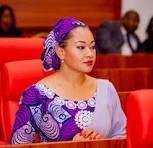
The Senator representing Kogi Central, Natasha Akpoti-Uduaghan, has called on the Federal Government and health administrators to urgently improve the working conditions, remuneration, and welfare packages for medical professionals across the country, particularly those serving in rural areas.
Speaking on Monday at the “Unfinished” forum—an event organized by Ward-C in collaboration with the National Human Rights Commission focusing on maternal health, women’s rights, and reproductive choices—the lawmaker emphasized that tackling Nigeria’s persistent maternal mortality crisis requires addressing the direct challenges health personnel face at the point of care.
According to Akpoti-Uduaghan, retainment of medical doctors, nurses, midwives, and support staff in underserved communities depends heavily on providing adequate incentives and a conducive work environment.
“Doctors and other health workers should have access to adequate remuneration, functional medical equipment, essential medicines, reliable electricity, conducive working environments, and opportunities for professional development,” Akpoti-Uduaghan stated. “Healthcare infrastructure cannot function effectively without the human capital required to operate and sustain it.”
The senator stressed that supplying medical equipment alone to rural clinics is insufficient if basic utilities and trained personnel are lacking. She cited the inefficiency of placing incubators or oxygen systems in rural health facilities without consistent power generation or staff skilled in neonatal emergency care.
To address these gaps, Akpoti-Uduaghan advocated for an integrated approach linking healthcare infrastructure, emergency transportation, functional laboratories, adequate blood banks, and professional welfare. She further called for stronger referral networks connecting primary healthcare centers in remote villages to general and specialist hospitals.
Expressing concern over national health metrics, the lawmaker suggested that official maternal mortality figures may undercount actual casualties in rural communities due to undocumented deaths and underreporting.
Reflecting on reproductive healthcare advocacy, Akpoti-Uduaghan noted that engagement with civil society initiatives and international perspectives had broadened her viewpoint, prompting her to personal action, including funding the construction of a maternity center to support underserved women.
She concluded by urging government agencies, civil society organizations, and healthcare stakeholders to maintain momentum on maternal healthcare reforms and ensure sustained investment in frontline health workers.