By Sandra Kenneth
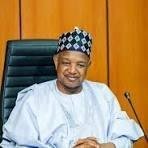
The Minister of Budget and Economic Planning, Senator Abubakar Bagudu, has raised concerns over Nigeria’s public spending levels, revealing that the country operates one of the smallest national budgets among the world’s 10 most populous nations despite its massive development needs.
Speaking in Abuja on Monday during a capacity-building workshop organized for the Senate Press Corps—themed “Leveraging Legislative Oversight and Media Collaboration to Safeguard the National Budget from Unlawful Insertion”—the minister called for an urgent national dialogue on revenue mobilization and fiscal expansion.
Bagudu emphasized that Nigeria must address fundamental questions regarding the true purpose and scale of its public expenditure if it hopes to realize its long-term economic targets, including President Bola Tinubu’s goal of building a $1 trillion economy under the Renewed Hope Agenda and Agenda 2050 framework.
“Out of the top 10 most populous countries in the world, we have the smallest national budget,” Bagudu said. “Should we continue with a budget that leaves our populace with one of the smallest allocations, or should we consider how we can mobilize more resources?”
He stressed that expanding the nation’s fiscal space is critical to funding essential development projects and infrastructure across the country.
Addressing members of the press, the former Kebbi State governor urged journalists to look beyond superficial budget controversies and conduct context-rich, evidence-based reporting. He cautioned media practitioners against quickly labeling every unfamiliar item as an irregular “budget insertion,” noting that budgeting involves human processes and potential administrative errors.
“We are dealing with human processes and human errors. Therefore, vigilance is necessary, and both the media and legislative oversight must remain alert,” Bagudu noted. He encouraged journalists to thoroughly investigate the origin, rationale, and target beneficiaries of budget provisions before reaching conclusions.
While reaffirming the public’s right to transparency and accountability, Bagudu also highlighted the need for responsible coverage when handling sensitive financial disclosures that could impact national security or strategic interests.
Furthermore, he acknowledged the National Assembly’s constitutional authority over the budget process, urging stronger public appreciation of how executive and legislative collaboration shapes public finance decisions.
Recent economic data reveals that the combined budgets of Nigeria’s 36 states and the Federal Capital Territory (FCT) surged by 47.5 per cent, rising from N27.22 trillion in 2025 to N40.14 trillion in 2026. Over the same period, the Federal Government’s 2026 budget reached N68.32 trillion, maintaining a higher share than all state allocations combined. While total capital expenditure grew in nominal terms from N19.94 trillion to N25.83 trillion, the proportion allocated to capital projects across states fell from 73.24 per cent to 64.34 per cent.