By Samuel Olusegun Precious
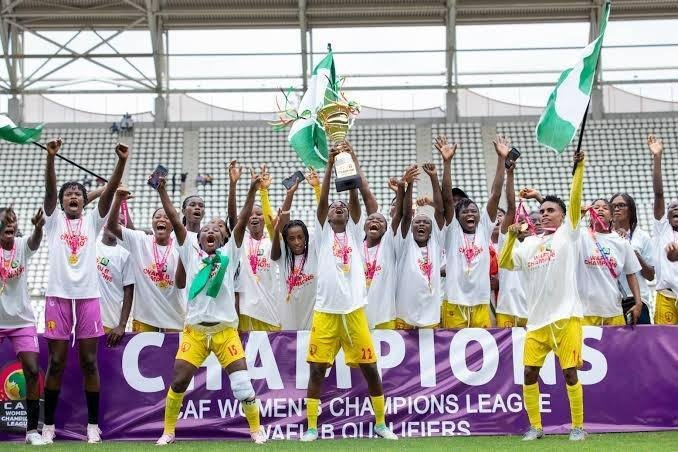
In 1998, Nigeria hosted the inaugural Africa Women’s Cup of Nations (AWCON) at the MKO Abiola Stadium in Abeokuta.
As an undergraduate student in Ogun State at the time, I had the privilege of watching history unfold from the stands. That eight-nation tournament featured a vastly different footballing landscape. South Africa’s Banyana Banyana, composed largely of inexperienced players who seemed more suited to a fashion runway than a football pitch, were routine underdogs.
They were easily outclassed on the field yet warmly embraced by empathetic Nigerian supporters.
Fast forward nearly three decades, and the contrast could not be starker.
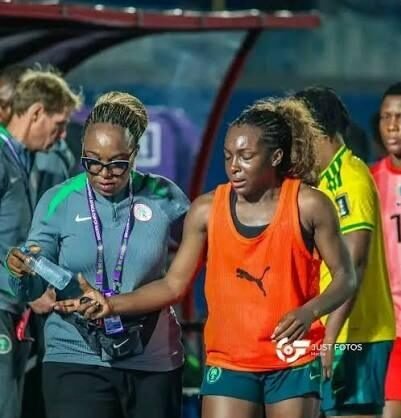
In a bitter twist of fate, that same South African side has eliminated the Super Falcons from qualifying for the 2027 FIFA Women’s World Cup. What was once Africa’s undisputed powerhouse suffered its worst tournament outing in history—failing to reach the quarter-finals, failing to secure a World Cup ticket, and dropping points against tournament debutants like Malawi.
This defeat adds salt to an already festering wound. Just months prior, South Africa’s Bafana Bafana knocked the Super Eagles out of contention for the 2026 FIFA World Cup. For decades, Nigerian football dominated this rivalry, tracing back to the 1994 World Cup qualifiers where Nigeria thrashed South Africa 4-0 in Lagos before holding them to a draw in Johannesburg. But raw talent alone is no longer enough to maintain dominance. The chickens have finally come home to roost.
A Systemic Collapse Across All Levels
The Super Falcons’ exit is not an isolated disappointment; it is the natural outcome of administrative decay overseeing Nigerian football. The decline spans every tier of the national system:
Senior Men’s Team: The Super Eagles have now missed two consecutive FIFA World Cups.
Youth & Olympic Teams: Nigeria has failed to qualify for three consecutive Men’s U-17 World Cups, missed two consecutive Olympic Games, and the Flying Eagles (U-20) have been knocked out of the upcoming U-20 AFCON and World Cup.
Domestic Leagues: Both the Nigeria Premier Football League (NPFL) and the Nigeria Women Football League (NWFL) remain in disarray. Aside from Enyimba FC’s back-to-back CAF Champions League titles in 2003 and 2004 and Dolphins FC reaching the Confederation Cup final in 2005, continental success has been nonexistent.
Today, top talent from the domestic league frequently departs for lower-ranked leagues in Rwanda, Tanzania, and Libya—a damning indictment of local league administration.
A Call for Accountability at the NFF
While global football governing bodies express astonishment at how a nation with such rich talent continues to flounder, the leadership of the Nigeria Football Federation (NFF) appears focused primarily on tenure retention. After every major failure, the standard response remains a predictable cycle of token apologies without meaningful structural reform.
With upcoming NFF elections on the horizon, token gestures are no longer acceptable.
“It is time for the Federal Government, football stakeholders, and passionate fans across the nation to demand complete structural accountability and reclaim Nigerian football before the damage becomes irreversible.”
Samuel Olusegun Precious is a Port Harcourt-based journalist and sports analyst.