By Sandra Kenneth
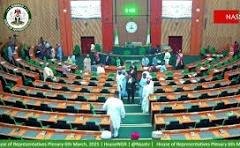
The House of Representatives has stepped in to curb mounting distortions in Nigeria’s downstream petroleum sector, pushing to eliminate US dollar-denominated charges on locally refined fuel and launching a full probe into the alleged centralisation of fuel import licences.
The stance was made public during an interactive session convened by the House Committee on Petroleum Resources (Downstream) with key industry players, including the Independent Petroleum Marketers Association of Nigeria (IPMAN), the Depot and Petroleum Products Marketers Association of Nigeria (DAPPMAN), and the Major Energies Marketers Association of Nigeria (MEMAN).
The stakeholder meeting forms part of ongoing legislative steps to amend the Petroleum Industry Act (PIA), boost local refining capacity, and protect consumers from inflated pump prices.
Speaking at the session, Committee Chairman Ikenga Ugochinyere criticized the Nigerian Ports Authority (NPA) and other agencies for collecting port fees in US dollars for petroleum products refined and distributed within the country.
“It is detrimental to the economy that domestic downstream transactions are still billed in dollars. This practice directly inflates the pump price of Premium Motor Spirit (PMS) for everyday Nigerians,” Ugochinyere said.
Licence Allocation Probe
The committee chairman also pledged an immediate inquiry into claims that fuel import licences for the first three quarters of 2026 were repeatedly granted to a select group of marketers to the exclusion of other qualified operators.
Ugochinyere confirmed that regulatory bodies and major agencies—including the Nigerian Midstream and Downstream Petroleum Regulatory Authority (NMDPRA), the Nigerian Upstream Petroleum Regulatory Commission (NUPRC), the NPA, and the Central Bank of Nigeria (CBN)—will be summoned to defend their actions and outline their licensing criteria.
He emphasized that while the legislature supports protecting Nigeria’s expanding domestic refining capacity, a balanced framework is necessary to protect existing distribution infrastructure and ensure national energy security.
Marketers Decry Inactive Depots, Market Distortions
Presenting DAPPMAN’s memorandum, Executive Secretary Mr. Olufemi Adewole painted a grim picture of the operating environment, revealing that at least 72 of Nigeria’s 154 licensed petroleum depots have remained largely inactive over the past year.
Adewole blamed the shutdown of nearly half the nation’s depot capacity on an uneven playing field, persistent trading losses, unfair import allocation practices, and duplicate charges levied on local supply routes.
Lawmakers are expected to synthesize inputs from upcoming agency appearances into legislative motions and PIA amendment bills aimed at fostering a more transparent, competitive, and affordable domestic energy market.