By Sandra Kenneth
President Bola Tinubu has called on African nations to forge a unified front to end the historical exploitation of the continent’s mineral wealth and halt the export of raw materials.
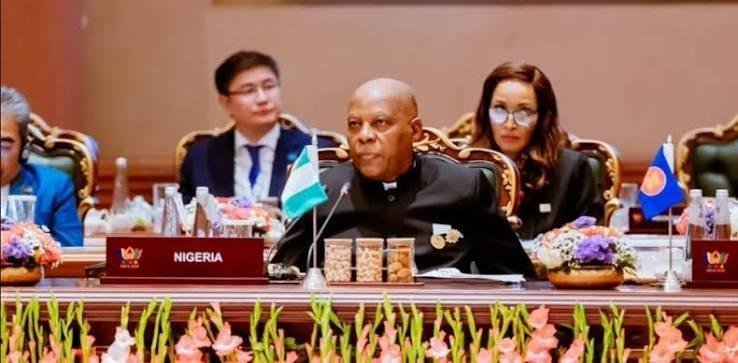
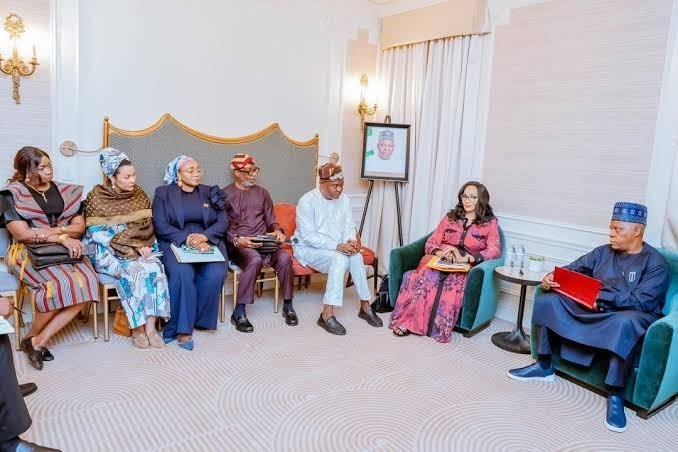
Speaking through Vice President Kashim Shettima on Monday during the third Africa Minerals Strategy Group (AMSG) High-Level Roundtable in New York, Tinubu urged leaders to transition the continent from a raw resource supplier into a global hub for local processing, manufacturing, and value addition.
“For generations, Africa has furnished the materials of prosperity elsewhere. Our duty is to ensure that the future being fashioned from African minerals has room for African ambition,” President Tinubu stated.
The high-level event, held on the sidelines of the 81st Session of the United Nations General Assembly, was convened under the theme “From Resources to Wealth: Continental Cooperation for Mineral Value Addition, Data Sovereignty, Innovative Financing and Critical Minerals Security.” The session was co-chaired alongside Nigeria’s Minister of Solid Minerals Development and AMSG Chairman, Dr. Dele Alake.
Shifting from Resource Extraction to Industrialization
Addressing international stakeholders and African leaders, Tinubu noted the paradox of mineral-rich communities lacking basic infrastructure, employment, and economic equity while driving the global transition toward clean energy, artificial intelligence, and advanced manufacturing.
He emphasized that local refining, battery production, component manufacturing, and skill acquisition are essential to reversing this imbalance.
“The worth of a mine must be counted in the lives it improves,” he said. “Jobs, industries, infrastructure, technology transfer, African enterprise participation, and prosperity retained across generations must measure our progress from resources to wealth.”
The Need for Continental Cooperation
Warning against harmful competition among African nations, Tinubu cautioned that offering lower royalties, weaker local content rules, or excessive concessions would only undermine collective bargaining power.
“Fragmentation leaves us exporting raw materials and buying finished goods at a premium. Cooperation gives our markets scale, our industries integration, our financing reach, and our negotiations authority,” he noted.
Highlighting domestic reforms, Tinubu pointed to Nigeria’s policy requiring local value addition for new mining licenses, stronger geological data management, regulation of artisanal miners, and decisive action against illegal mining. He cited Nigeria’s solid minerals revenue growth—rising from ₦6 billion in 2023 to projected figures near ₦70 billion—and recent lithium processing investments in Nasarawa State as proof that strict terms can successfully attract major foreign capital.
Binding Frameworks for the Future
Tinubu urged AMSG member states to ensure that the newly signed Continental Integration and Economic Assurance Declaration delivers tangible outcomes. He stressed that the framework must establish predictable investment corridors backed by clear implementation timelines, sustainable financing platforms, and public accountability.
Concluding his address, the Nigerian leader called for international partnerships built on mutual respect and sovereign equality: “Reliability must never mean dependency, and partnership must never demand inequality.”