
By Elvira Jordan
Environmental stakeholders from across the Niger Delta have called on the Federal Government and international oil companies to immediately expand the ongoing Ogoniland environmental cleanup to all oil-producing communities in the region, warning that failure to do so threatens the restoration of the entire ecosystem.
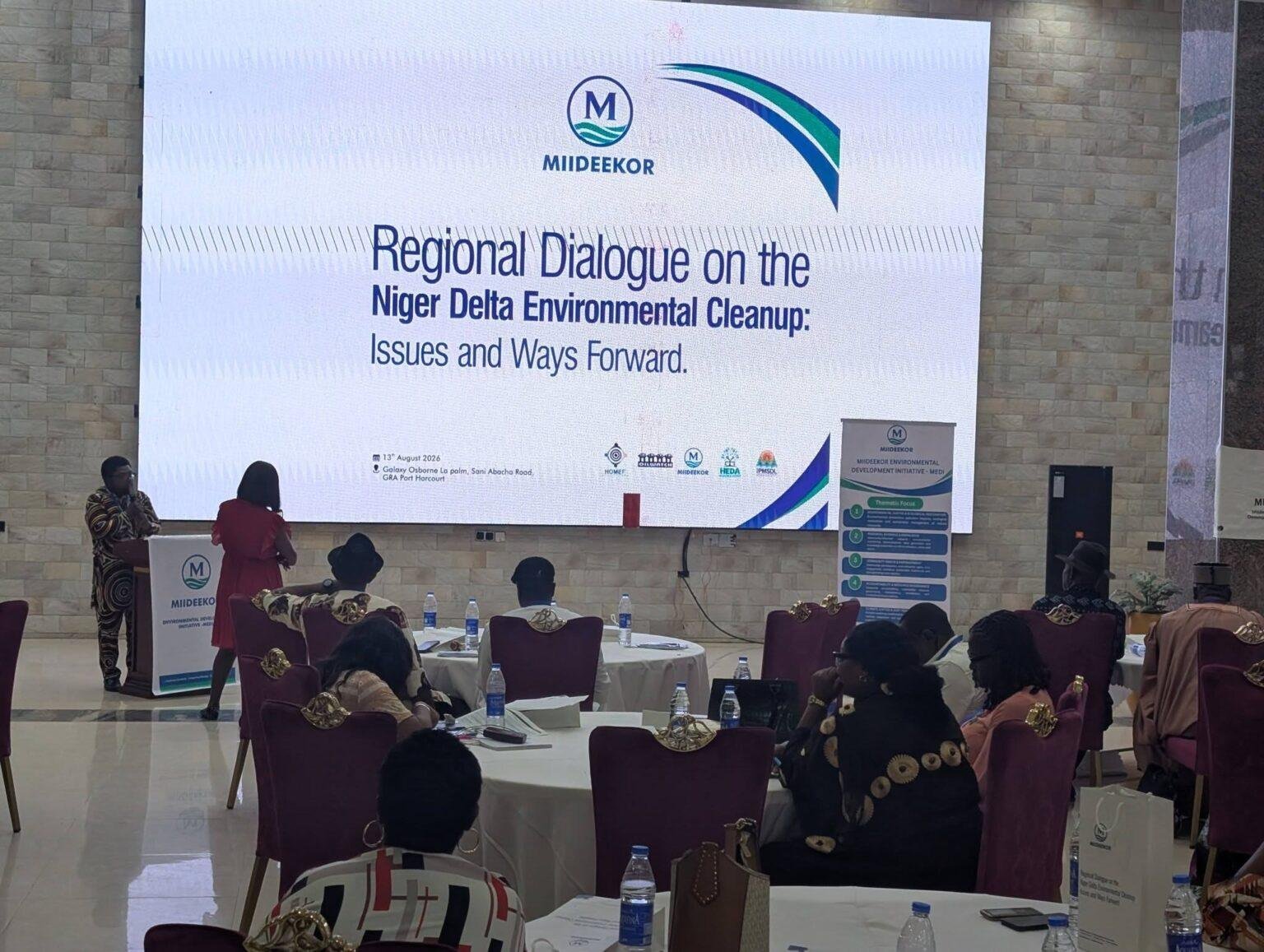
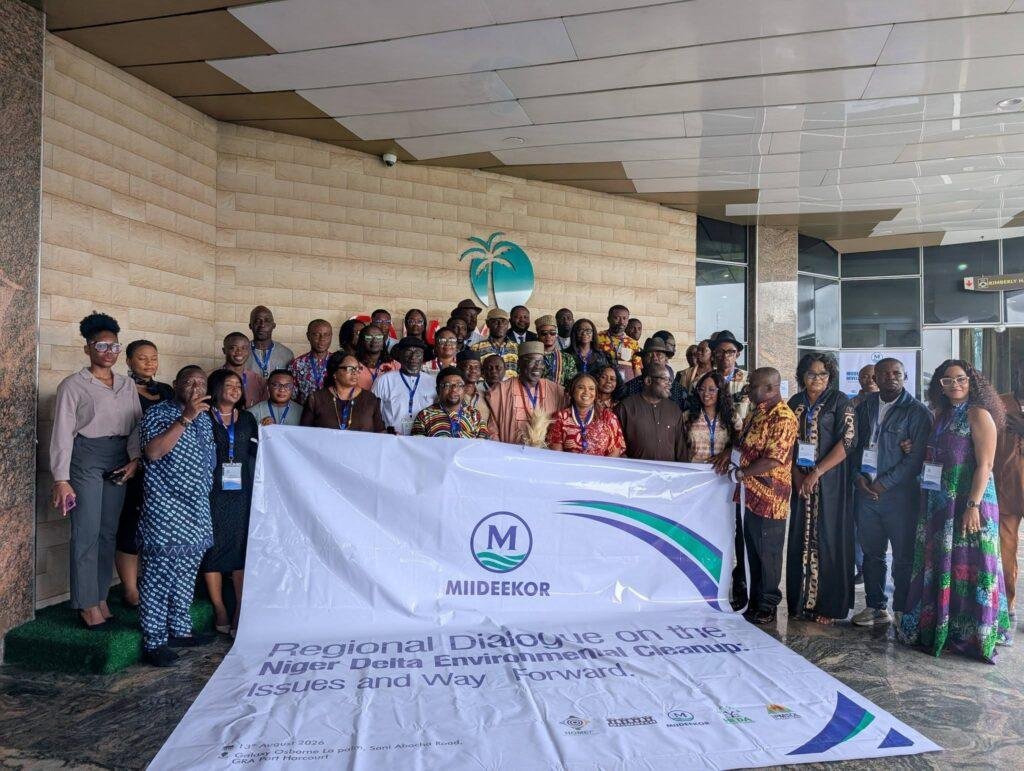
The call was made during a Regional Dialogue on the Niger Delta Environmental Cleanup, organized by the MIIDEEKOR Environmental Development Initiative (MEDI) on Thursday in Port Harcourt.
Speaking at the event, renowned activist and Team Lead of MEDI, Comrade Celestine Akpobari, argued that the remediation being undertaken in Ogoniland by the Hydrocarbon Pollution Remediation Project (HYPREP) must not be treated as an isolated effort.
“There is nothing left in the Niger Delta environment after decades of exploration and exploitation,” Akpobari stated. “Ogoniland will not be clean until other parts of the Niger Delta are clean, because the entire Niger Delta is interconnected by water. The UNEP report has been released; the Bayelsa Environmental report has been released. What are we doing? We can’t continue to keep quiet.”
Akpobari urged community leaders, civil society organizations, and advocacy groups to move beyond rhetoric and adopt unified strategies capable of holding both the government and multinational oil firms accountable, particularly as international oil companies continue to divest their onshore assets.
Echoing these concerns, Alagoa Morris, Chief Operating Officer of Environmental Conservation, Agriculture and Rural Development (ECARD), pointed to the findings of the Bayelsa State Oil and Environment Commission. He criticized the current regulatory response to oil spills, alleging that operators often resort to superficial measures—such as scooping up contaminated soil and burying it—rather than carrying out genuine, scientific remediation.
Morris noted that despite the Bayelsa report being formally submitted to the Presidency by the state governor, neither the Federal Government nor the responsible oil companies have issued a public response or action plan. He emphasized that divesting oil majors must be compelled to settle their legacy environmental liabilities before exiting the region.
The dialogue brought together civil society actors, community representatives, and environmental advocates to address pressing issues including gas flaring, loss of livelihoods, corporate divestment, and women’s participation in environmental governance.
Participants concluded the summit by adopting an action plan to establish the Niger Delta Environmental Cleanup Accountability Roadmap, a coordinated strategy aimed at driving region-wide remediation and enforcing corporate accountability.