By Sandra Kenneth
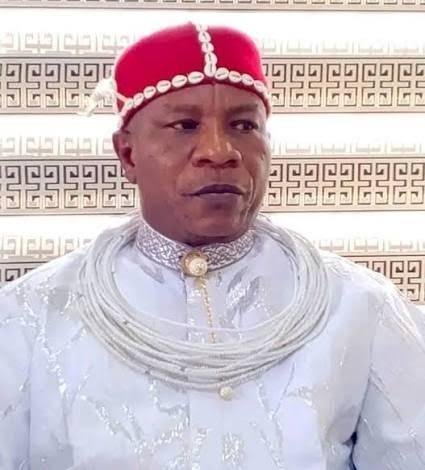
The monarch of Upata Kingdom in Ahoada East Local Government Area of Rivers State, His Majesty Dr. Felix Otuwarikpo, has dismissed the Federal Government’s plan to deploy virtual teachers to underserved schools as a “tall dream,” citing severe infrastructural deficits and widespread digital exclusion in rural communities.
Reacting to the federal initiative, the royal father acknowledged that while commitment can achieve lofty goals, the foundational realities on the ground make the implementation of virtual learning nearly impossible in its current state.
Network Deficits, Illiteracy, and Lack of Gadgets
Highlighting the hurdles facing rural education, the monarch pointed out that many remote communities lack basic telecommunication masts and reliable road access.
The Nye-Udu Upata the third questioned the practicality of deploying a digital curriculum when the targeted students lack the requisite digital literacy and devices. Even if basic smartphones were considered, he noted that device ownership and the recurring cost of internet data subscriptions remain major barriers for rural households.
“In rural areas, there are many communities where you don’t even have mast… the children that are supposed to benefit from this virtual learning are not even computer literate,” Dr. Otuwarikpo stated.
“If assuming they have telephones, you know, very good telephone, who does the subscription?”
Teacher Shortages and Abandoned Institutions
The traditional ruler also drew attention to the crippled state of physical school infrastructure, noting that many community schools have been deserted by academic staff.
Using Community Secondary School, Ihuaba in Ahaoda East local government as an example, he revealed that institutions often suffer from severe staffing deficits—sometimes leaving only a junior secondary principal behind while other teachers abandon the posts. Under such conditions, he asked who would guide students on logging into virtual platforms, noting that an estimated 99% of these children have never had internet access or digital training.
A Call to Prioritize Basic Education
Decrying what he described as political posturing with the future of Nigerian youth, Dr. Otuwarikpo warned against treating education as an afterthought, noting that leaders who benefited from sound historical community school systems are now presiding over the collapse of primary, secondary, and tertiary institutions.
“We can be politicking, but we should not politic with the life of our children. Education is not a priority in Nigeria,” he warned.
Concluding his assessment, the monarch insisted that building a functional higher education system is impossible without first rescuing crumbling primary and secondary schools, urging the government to focus on recruiting and training physical teachers and fixing foundational gaps before pursuing ambitious digital projects.