By Elvira Jordan
Health stakeholders in Rivers State have called for stronger community-based sensitization and collaboration to sustain access to HIV, tuberculosis (TB), and malaria services amid declining donor funding and limited resources for community interventions.
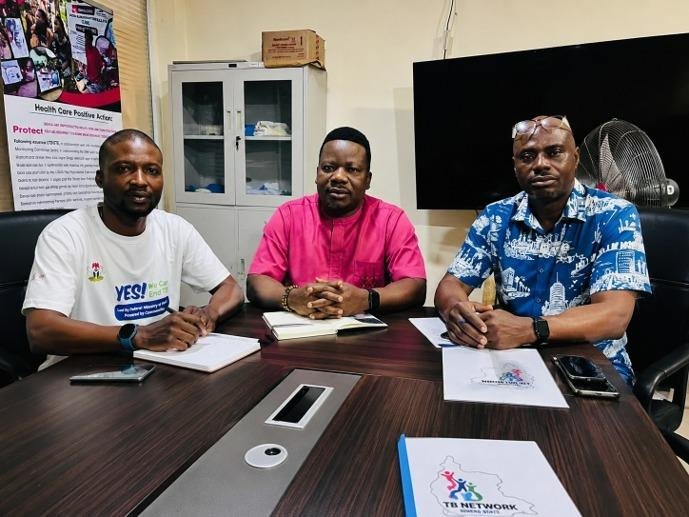
The call was made during an advocacy visit by the State Advocacy Team (SAT) to the Programme Manager of the Rivers State Agency for the Control of HIV/AIDS (RIVSACA) at the agency’s state office in Port Harcourt.
The meeting focused on identifying practical, cost-effective and sustainable approaches to increasing community uptake of HIV, TB and malaria prevention, testing and treatment services, particularly as donor-supported interventions face increasing funding constraints.
Stakeholders acknowledged that community-based testing, outreach programmes and integrated health campaigns had contributed significantly to improving access to essential health services. However, they noted that the changing funding environment required a shift towards low-cost, high-impact approaches that could be sustained through existing community structures.
Speaking at the meeting, State Coordinator of the Network of People Living with HIV/AIDS in Nigeria (NEPWHAN), Mrs. Chigozim Blessing, emphasized the importance of engaging influential community stakeholders as champions of health promotion.
She identified traditional rulers, Community Development Committee executives, religious leaders, women and youth leaders, Medical Officers of Health, Local Action Committee on AIDS (LACA) managers, TB Local Government Focal Persons, Disease Surveillance and Notification Officers, malaria programme focal persons, Ward Development Committees and Local Development Committees among those who could play critical roles in sustaining community health interventions.
According to her, strengthening collaboration with these stakeholders would promote community ownership of health programmes while improving referrals to health facilities providing free HIV, TB and malaria services.
Mrs. Chigozim noted that incorporating HIV, TB and malaria information into routine community engagements could improve health-seeking behaviour, increase awareness of available services and help address stigma and misconceptions surrounding HIV and TB.
Representing the State Malaria Elimination Programme (SMEP), Pastor John Ihua-Maduenyi also advocated the integration of health sensitisation into existing community platforms, including church and mosque gatherings, community development meetings, market association meetings, youth and women group activities, school engagements and other routine social events.
SAT member and leader of the State TB Network, Mr. Messiah Fyneface and other participants stressed the need to maximize existing community networks to reach residents with information on available health services and encourage early utilization.
Participants agreed that community sensitization and awareness creation offered one of the most feasible strategies for maintaining demand for HIV, TB and malaria services.Rather than relying on stand-alone outreach programmes that require substantial financial and logistical resources, stakeholders recommended integrating health messages into existing community governance structures, social platforms and public gatherings.
They described the approach as both cost-effective and sustainable because it would eliminate the need for separate mobilization exercises while allowing health messages to reach larger audiences through trusted community channels.
Stakeholders also emphasized the need to leverage available resources instead of relying exclusively on direct financial support for community interventions.
The State Advocacy Team recommended stronger partnerships with government institutions and implementing partners to access Information, Education and Communication materials, job aids, referral tools, condoms, malaria prevention materials and other health promotion commodities.
The meeting concluded that institutionalizing community-led sensitization through existing governance and leadership structures would provide a sustainable mechanism for maintaining demand for HIV, TB and malaria services beyond the lifespan of donor-funded projects.
Participants stressed that improved coordination, resource leveraging and multisectoral collaboration would be critical to ensuring continued access to essential health information and increasing utilisation of free HIV, TB and malaria services across project communities.